












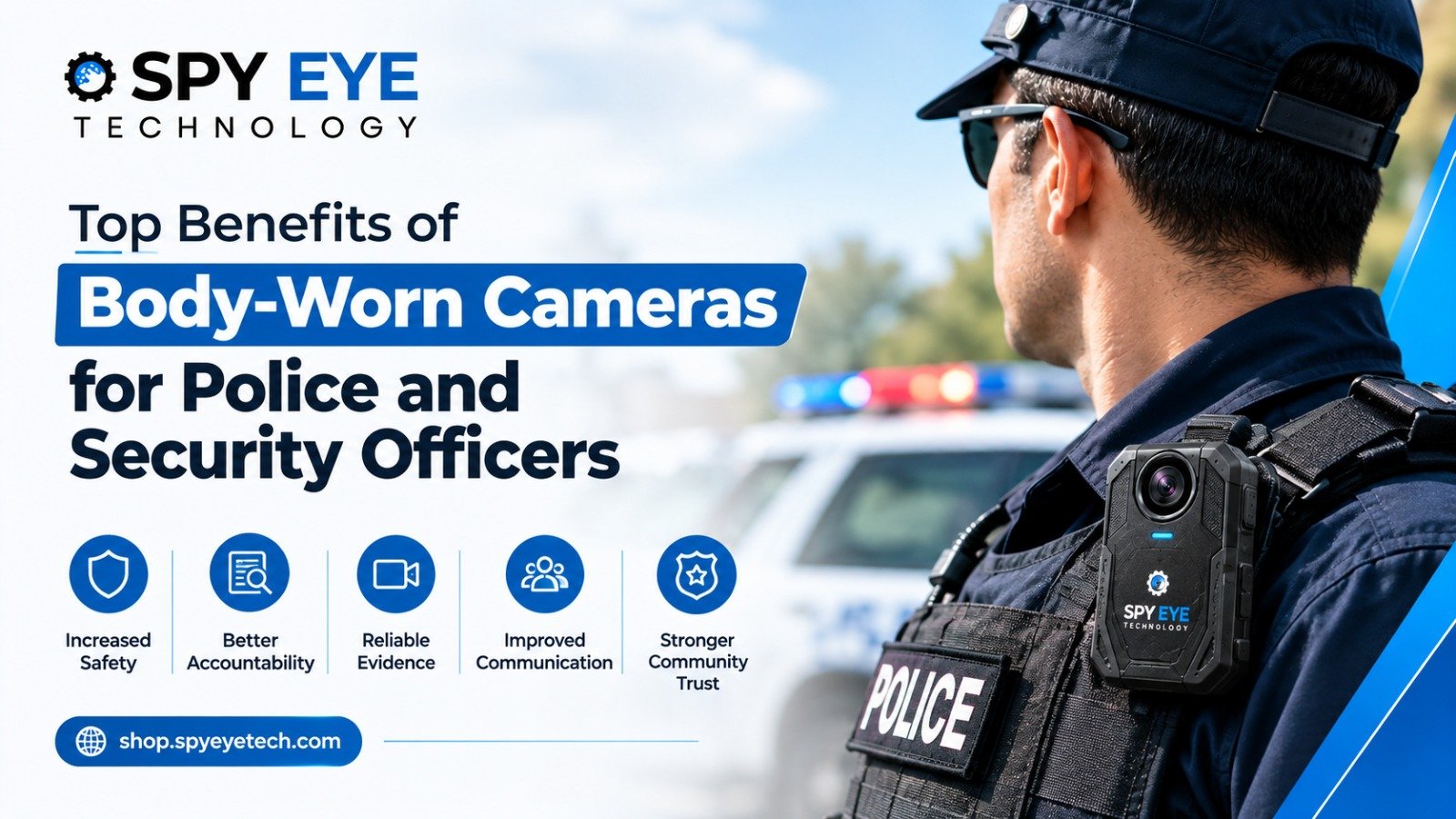
There are numerous benefits of using body-worn cameras for both law enforcement personnel and private security employees. Police officers and security guards are often in situations that require them to document their actions. They may also be required to explain their actions to investigators or defense attorneys in the future. It is very helpful to have an accurate record of an incident, especially if the account is contested.
An added benefit of body-worn cameras is that they support and protect the employee. Cameras can enhance an employee’s confidence and help them document interactions.
1. Body-worn Cameras Capture Evidence
One important role of a body-worn camera is to serve as a recording device. Cameras often provide a first-person account of an incident.
Cameras often capture evidence that may be missed by a person. With a record of the event, there may be less of a need to rely on the memory of involved or witness persons. Security personnel may use recorded evidence to report a finding or explain their actions.
This is useful for:
- Documentation of workplace incidents
- Investigating public disturbances
- Documenting rule violations
- Documenting incidents requiring response and/or involvement of first responders
- Resolving interpersonal disputes
- Conducting and documenting reviews of incidents
2. Promotes Accountability and Transparency
The use of body-worn cameras by police officers and security personnel promotes accountability in their interaction with the public and ensures adherence to internal policies and procedures of the organization. Likewise, body-worn cameras help the public and other stakeholders to be mindful of their behaviors during an interaction.
While body-worn cameras cannot eliminate conflict, they facilitate documentation of interactions and potentially assist in investigating complaints.
From a technical and strategic standpoint, the use of body-worn cameras by police and other security personnel supports the objectives of organizational management.
3. Improves Officers and Security Personnel Safety
A primary goal of deploying body-worn cameras by security and response personnel is to enhance the safety of the personnel.
Body-worn cameras facilitate the capturing of security and response personnel interactions for a period of time, and on an occasion where personnel are involved in an altercation, the body camera can capture and/or document evidence of the interaction.
Body-worn cameras are supplemental to and should be used in conjunction with other security measures and procedures.
4. Video Evidence
Video evidence can be very useful to an investigation for clarification of an event or incident. Video evidence from body-worn cameras, for example, can be useful to capture interactions, movements, and environmental conditions and can assist in providing a complete record of an event.
Body-worn camera evidence can document, for example,
- How a subject or officer involved in an incident responded
- What a subject or officer involved in an incident said
- What actions a subject or officer involved in an incident took
- What occurred in the incident
- What occurred after the incident
Footage from a body-worn camera can help clarify an incident, but it can only do so if the event in question was captured by the camera. Other limitations can include the storage capacity of the camera and the quality of the recording.
5. Helps Resolve Disputes
In any environment where security services are provided, there can be differences of opinion or complaints. For instance, a customer may complain about the conduct of a security officer, or two persons may give differing accounts of an incident.
Body-worn camera evidence can be one source of information to help resolve such disputes.
6. Promotes Appropriate Conduct
The use of body-worn cameras can assist in clarifying an incident and can also assist in limiting complaints about the conduct of security personnel. For example, body-worn camera evidence can clarify for management the nature of a complaint made about an employee.
This is especially valuable to security companies with employees working at various locations, like
- Shopping malls
- Hospitals
- Apartments
- Hotels
- Warehouses
Premises can also include construction sites, offices, and other locations.
Management is also allowed to use body-worn camera recordings for training and other lawful purposes.
7. Makes Training More Practical
There are a number of situations where body-worn camera technology can make security or law enforcement training more realistic.
The technology also has many other benefits to an organization.
With a body-worn camera system, an organization can digitize its incident management system. This provides numerous benefits. For example, locating a particular piece of evidence becomes a lot easier.
8. Helps Organizations Manage Incidents More Efficiently
An organization is allowed to implement a body-worn camera system to improve its service delivery and incident management. Before implementing the technology, an organization needs to balance the benefits against costs, including the risks associated with collecting and storing personal information.
What Should You Consider Before Choosing a Body-Worn Camera?
There are many factors to consider when deciding which body-worn camera technology to implement.
Things to consider include:
How long do the batteries last?
- What storage capacity is the device?
- What is the quality of the video and audio?
- Is there a feature that allows the device to capture video in low-light conditions or at night?
- How tough is the device? Will it function in all weather conditions?
- Is there a built-in GPS?
- How tough is the device? Will it function in all weather conditions?
- Is there a built-in GPS?
- Is the device secure?
- Is the device simple to use?
- What is the device management system like?
- Is there a charging system?
- What policies and procedures govern the use of the device?
- Are there policies that address the retention of the data captured by the device?
Final Thoughts
The use of body-worn cameras by members of a police or security service has increased in recent years. While the primary purpose of body-worn cameras is to capture video of incidents, they are also used for other purposes such as creating and keeping documentation, aiding an investigation, improving the service’s interaction with the public, and improving security personnel training.
Body-worn cameras have the potential to improve security services and create a better, more secure environment for the general public.